
Adaptive Functional Electrical Stimulation to assist Foot-Drop paretic patients
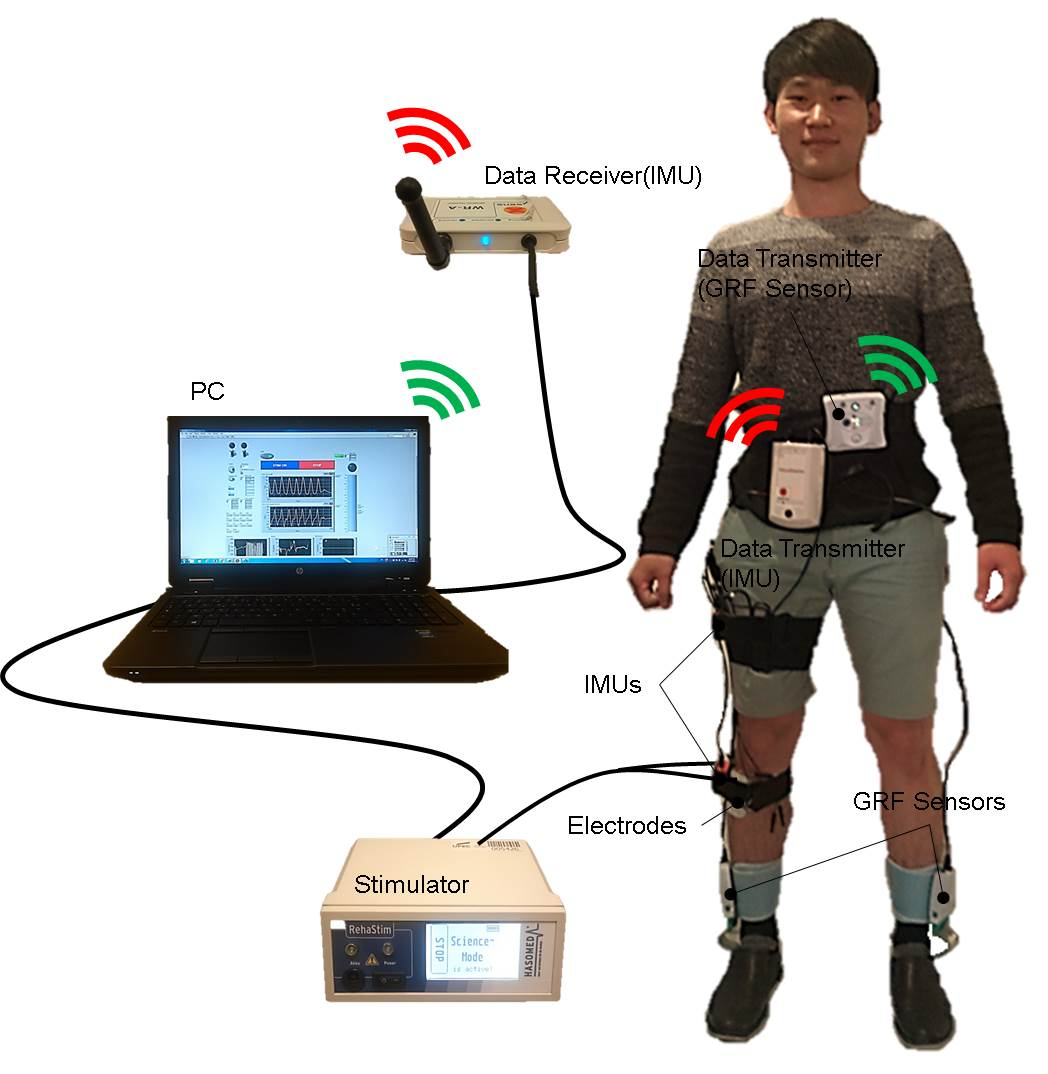
This demonstrator shows an adaptive knee-joint based Functional Electrical Stimulation (FES) method to correct the foot drop of paretic patients during swing phase. The rationale behind adaptive FES is to amplify dorsiflexor stimulation in the late swing when it is most needed in order to face the increased plantar flexor co-contraction as gastrocnemius muscles are stretched by knee re-extension. To accurately detect the swing phase (i.e., toes off (TO) and initial contact (IC)), a novel algorithm is proposed by using a foot-mounted inertial measurement unit (IMU). The proposed strategy is verified by experiments conducted with three healthy subjects and three paretic patients. The experimental results show that highly accurate detection of TO/IC can be achieved under different walking speeds and foot contact conditions (normal and abnormal gaits). The clinical experimental results with paretic patients also revealed that similar effects on ankle dorsiflexion can be observed during mid and late swing using the proposed adaptive FES with respect to the standard FES ON/OFF method, while the adaptive FES used lower stimulation intensity.
References:
[1] W. Huo, V. Arnez-Paniagua, M. Ghedira, Y. Amirat, J-M Gracies, and S. Mohammed, “Adaptive FES Assistance using a Novel Gait Phase Detection Approach", IEEE/RSJ IROS 2018, Accepted
[2] W. Huo, M. Ghedira, S. Mohammed, V. Arnez-Paniagua, E. Hutin, J-M Gracies,
"Effect of knee joint angle-based, adaptive functional electrical stimulation of the peroneal nerve in spastic paresis. A case report", Annals of Physical and Rehabilitation Medicine, 61, e475-e476, 2018