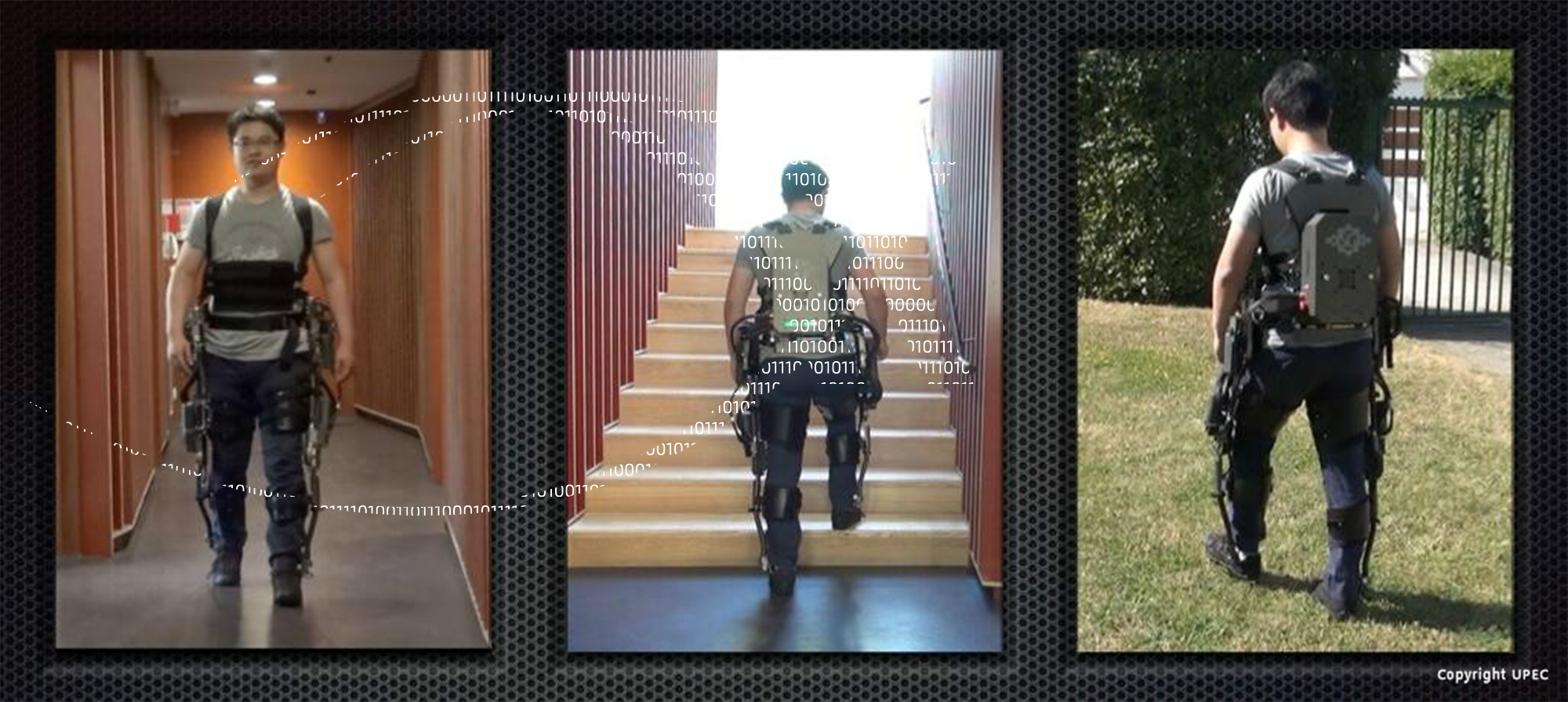


Soutenance de thèse de Mauricio Gomez Morales.
Mauricio Gomez Morales, doctorant de l’équipe SIRIUS soutiendra sa thèse le 17 décembre à 14:00 en Amphi RT, campus de Vitry-sur-Seine de l’UPEC-120 rue Paul Armangot, 94400 Vitry-sur-Seine.
Titre : Hybrid Cloud Model Checking using the Interaction Layer of HARMS for Ambient Assistive Living Environments
Directeur(s) de thèse : Y. Amirat, E. Matson (Purdue University)
Résumé: Résumé: Soon, humans will be co-living and taking advantage of the help of multi-agent systems in a broader way than the present. Such systems will involve machines or devices of any variety, including robots. These kind of solutions will adapt to the special needs of each individual. However, to our concern, systems like the ones mentioned above might encounter situations that will not be seen before execution time. It is understood that there are two possible outcomes that could materialize; either keep working without corrective measures, which could lead to an entirely different end or completely stop working. Both results should be avoided, especially in cases where the end user will depend on a high level guidance provided by the system, such as in ambient intelligence applications. This dissertation worked towards two specific goals. First, to assure that the system will always work, independently of which of the agents performs the different tasks needed to accomplish a bigger objective. Second, to provide initial steps towards autonomous survivable systems which can change their future actions in order to achieve the original final goals. Therefore, the use of the third layer of the HARMS model was proposed to insure the indistinguishability of the actors accomplishing each task and sub-task without regard of the intrinsic complexity of the activity. Additionally, a framework was proposed using model checking methodology during run-time for providing possible solutions to issues encountered in execution time, as a part of the survivability feature of the systems
final goals.
Jury:
K. Barkaoui, professeur, CNAM Paris
P. Reignier, professeur, Polytechnique de Grenoble
S. Galland, Université de Technologie Belfort-Montbéliard
A. Chibani, maitre de conférences, Université Paris Est Créteil
E. Matson, Purdue University- West Lafayette
Y. Amirat, professeur, Université Paris Est Créteil