Presentation - Advances in Multiobjective Optimization and Applications in Clustering and Computational Biology

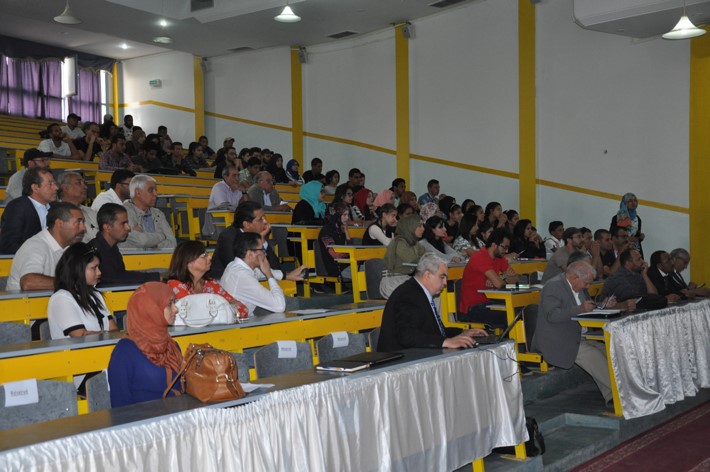
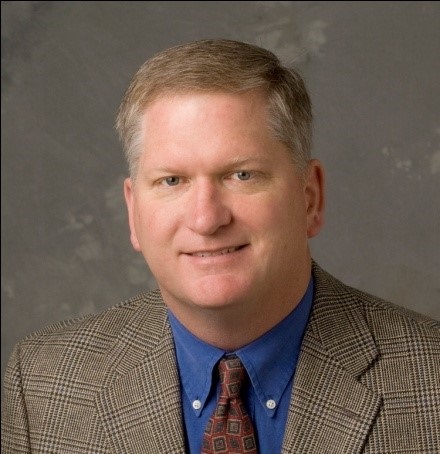
Sanghamitra Bandyopadhyay, Professor at the Indian Institute of Statistics in Calcutta (India) and currently visiting France at LIP 6 (Sorbonne University) as part of the CEFIPRA program, will make a presentation on October 15 at 4 pm in the meeting room of the laboratory on the site of Vitry sur Seine. This presentation should be of interest to all researchers in the laboratory working in the field of optimization methods.
Contact : Patrick Siarry.

Title : Advances in Multiobjective Optimization and Applications in Clustering and Computational Biology

Abstract: Many real-life problems require the simultaneous optimization of multiple objectives that often conflict with each other. Such problems are referred to as multiobjective optimization (MOO) problems. In contrast to single objective optimization, which yields a single best solution, in MOO the final solution set contains a number of Pareto-optimal solutions, none of which can be further improved on any one objective without degrading it on another. The present talk will first explain the basic principles of multiobjective optimization, and will then provide an overview of a popular multiobjective optimization technique. Some applications of multiobjective optimization in clustering and computational biology will be discussed. To help understand the applications in computational biology better, a brief introduction to molecular biology will be presented. The talk will conclude with a mention of current trend of research in multiobjective optimization.

Biosketch: Sanghamitra Bandyopadhyay joined the Machine Intelligence Unit of the Indian Statistical Institute as a faculty member in 1999, after completing her PhD from the same Institute.. She is currently the Director of the Institute. Her areas of research interest include computational biology and bioinformatics, soft and evolutionary computation, pattern recognition and data mining. In these areas she has published more than 300 research articles in various journal, conferences and edited volumes. She has published six authored and edited books from publishers like Springer, World Scientific and Wiley. Sanghamitra has worked in various Universities and Institutes world-wide including in USA, Australia, Germany, France, Italy, China, Slovenia and Mexico, and delivered invited lectures in many more countries. She has received several awards and fellowships including the Bhatnagar Prize, Infosys award, TWAS Prize, DBT National Women Bioscientist Award (Young), INAE Silver Jubilee Prize, Young scientist/engineer medals of INSA, INAE and Science Congress, JC Bose Fellowship, Swarnajayanti Fellowship and Humboldt Fellowship. She is a Senior Associate of ICTP and Fellow of INSA, INAE, NASI and IEEE. She is currently a member of the Science, Technology and Innovation Advisory Council of the Prime Minister of India.
Seminar - Ethics: the New Frontier of Technology

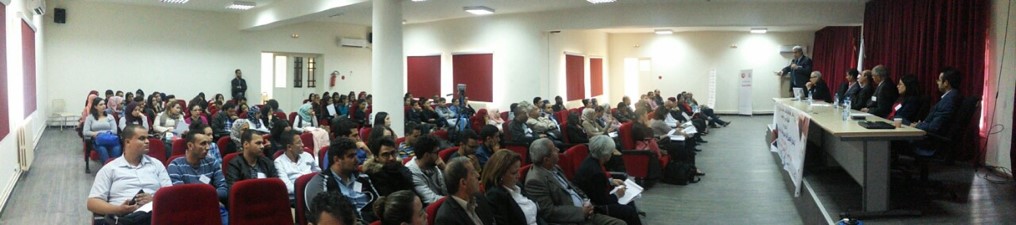
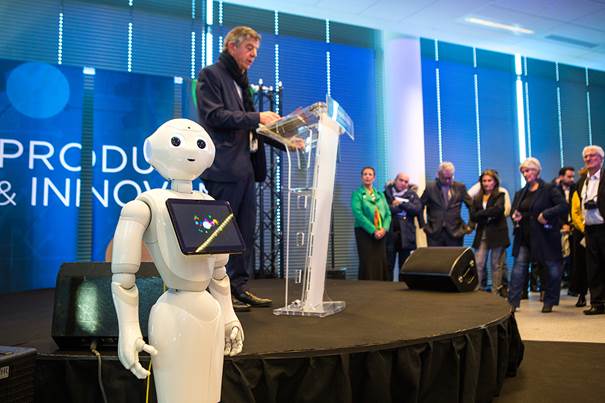
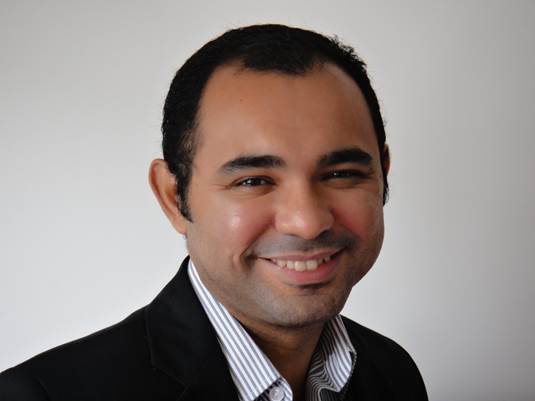
On Wednesday, March 6 at 4pm (Amphi RT), Edson Prestes, professor at the Federal University of Rio Grande do Sul (UFRGS) in Brazil and international expert in AI, Robotics and Ethics, will give a presentation on the theme : « Ethics: the New Frontier of Technology ».

Title : Ethics: the New Frontier of Technology

Abstract : Nowadays, Ethics is considered the New Green. Several Companies, NGOs and Governments already understood how important is to put the human being in the center of our technological development. This implies in understanding not only the human values but also incorporating them in all technological products which may be software or hardware. If technology is developed without this consideration, certainly it will impact negatively people's daily lives. In fact, we are already witnessing this impact in current technology. There are several examples of human rights violation. This trend tends to increase if we, as a global society, do not have a wide conversation and reach on a global agreement. Fortunately, organisations like IEEE and UN are playing a proactive role in this discussion. In this talk, I intend to give an overview about the IEEE and UN initiatives and also provide information about how to join these global efforts. My main message is we need to be protagonists of our lives!

Short bio : Edson Prestes received his B.Sc. degree in Computer Science(CS) from the Federal University of Pará (UFPa), Brazil, in 1996 and M.Sc. and Ph.D. in CS from the Federal University of Rio Grande do Sul (UFRGS), Brazil, in 1999 and 2003, respectively. Currently, he is Professor and Leader of the Phi Robotics Research Group at Institute of Informatics/UFRGS. He is IEEE Senior Member and Member of the IEEE Robotics and Automation Society (IEEE RAS) and IEEE Standards Association (IEEE SA). Over the past years, he has been working in different international initiatives related to Standardisation, Humanitarian Activities, Robotics and Ethics. In these groups, Edson has been served in various roles. For instance, he is Associate Vice-President in Industrial Activities Board at IEEE RAS; vice-chair of IEEE RAS Standing Committee for Standards Activities; chair of the IEEE RAS/SA P7007 - Ontological Standard for Ethically Driven Robotics and Automation Systems Working Group; member of the IEEE Global Initiative on Ethics of Autonomous and Intelligent Systems; member of the IEEE RAS Special Interest Group on Humanitarian Technology; member of the MIT/IEEE CXI - Global Council on Extended Intelligence; Academic Committee Member of the Zhejiang University Robotics Institute, China; Fellow at EP3 Foundation and Member of the European AI Alliance. Recently, The UN Secretary-General, Mr. António Guterres invited Edson to be member of the UN High-level Panel on Digital Cooperation co-chaired by Ms. Melinda Gates and Mr. Jack Ma.

Organization of the first and second edition EduPi

Edupi is an educational action initiated and co-organized by members of the CIR/LISSI team.
It is concretized by an annual event which takes the form of a seminar of exchanges between students, professors and actors of the IoT.
This action aims to help reduce technological inequalities in African countries and in particular the Maghreb countries.
With a theme of connected objects, the first edition of Edupi was held on 23 September 2017 at the Higher Institute of Technological Studies of Kef in Tunisia.
The second edition took place at the University of Jendouba in Tunisia and focused on themes related to "Connected Health".

EduPI Edition#1
EduPI Edition#2

Stay at LISSI, Dr. Kwangtaek Kim (INU, South Korea)

The LISSI welcomes Kwangtaek Kim, researcher at Incheon National University (INU) in South Korea for a one-month stay. This stay is a continuation of the PHC STAR HAFOAR (Haptic Ankle Foot Orthosis for Assistance and Rehabilitation) project between LISSI and INU.

Short-bio : Dr. Kwangtaek Kim is an Assistant Professor at Incheon National University (INU), South Korea, where he has been since 2015. Prior to joining INU, he was a research professor at Yeonsei University, Seoul, Korea from 2014 to 2015, and a full time researcher at Microsoft Research Asia from 2012 to 2014. He has also led a tele-presence team at LG Advanced Research Institute from 2011 to 2012, and did research in brain machine interface as a postdoctoral researcher at the State University of New York (SUNY) Downstate Medical Center, NYC from 2010 to 2011. He received his Ph.D. in the school of Electrical and Computer Engineering from Purdue University, USA, in 2010, and a B.E. and an M.E. from Korea University in 1998 and 2001, respectively. Prior to his PhD study, he worked for several research companies such as LG, Samsung, and Korea Government Research Institute as a research engineer. He received a distinguished teaching award from INU in 2016 and a Spot Award from Microsoft Research in 2013. His research focuses on haptic technologies including optimal perception with two sensory channels (vision and touch), haptics assisted imaging systems for medical applications, wearable robots combined with haptic feedback for rehabilitation, brain signal based haptic interface, and 3D haptic rendering.

Permanent positions in 2019


L’Université Paris Est Créteil ouvrira au concours en 2019, 2 postes d’enseignants-chercheurs en section 61 affectés au LISSI :

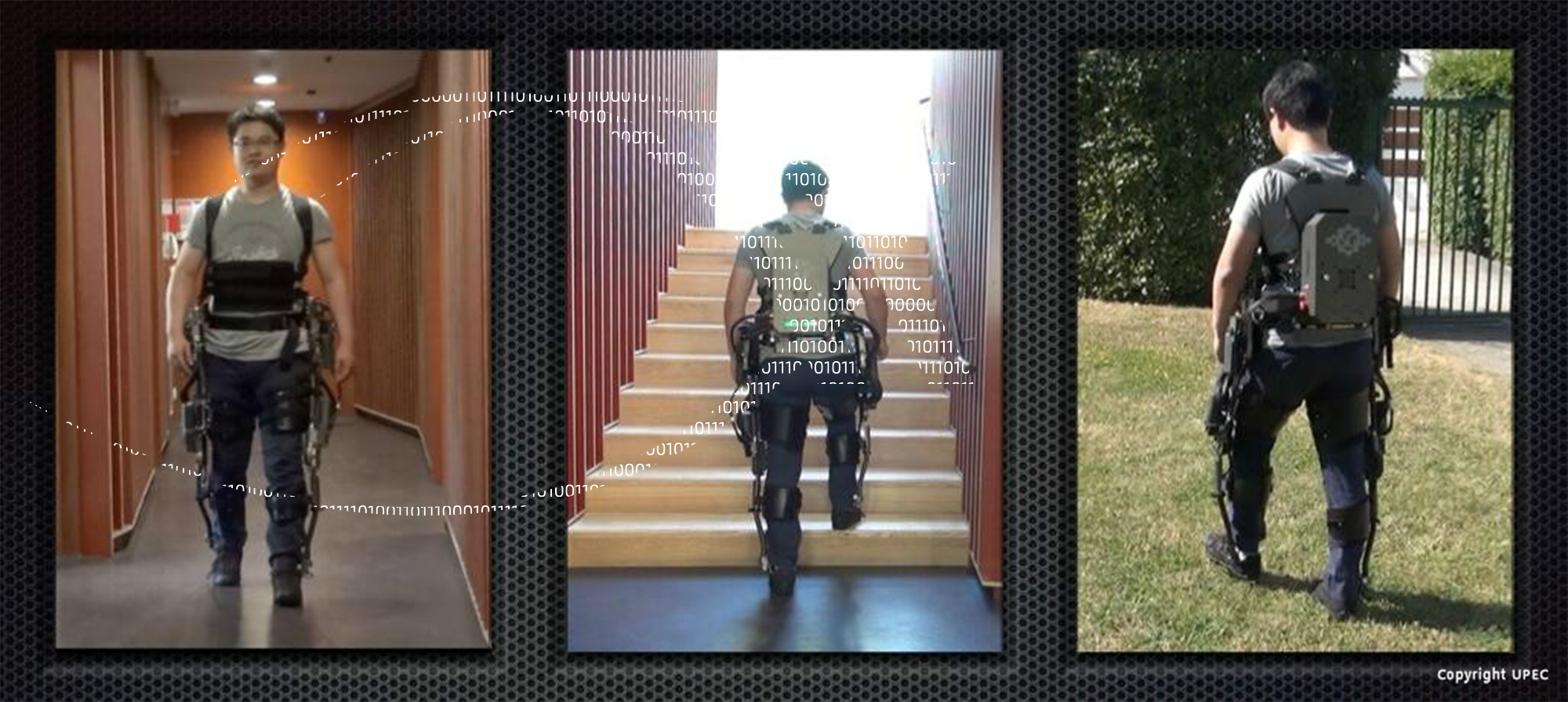
1 poste de professeur – Robotique d’assistance/Exosquelettes- enseignement à l’IUT de Créteil-Vitry, Département RT

1 poste de MCF – Analyse des données/Deep Learning/Optimisation stochastique – enseignement à l’IUT de Créteil-Vitry, Département GEII

Soutenance de thèse de Victor Arnez Paniagua

Soutenance de thèse de Victor Arnez Paniagua.

Victor Arnez Paniagua, doctorant de l’équipe SIRIUS soutiendra sa thèse le 20 décembre à 9:30 en Amphi RT, campus de Vitry-sur-Seine de l’UPEC-120 rue Paul Armangot, 94400 Vitry-sur-Seine.

Titre : Approches de commande adaptative d’une orthèse actionnée de la cheville pour l’assistance à la marche

Directeur(s) de thèse : Y. Amirat, S. Mohammed

Résumé: Les déficiences neuro-motrices subies à la suite d’un accident vasculaire cérébral, peuvent se traduire par un mauvais contrôle de l’articulation de la cheville lors de la marche du sujet. Un des symptômes majeurs qui illustre cette déficience est celui du « foot drop » ou pied tombant qui apparait le long de la phase d’oscillation. Ces dernières années, les auxiliaires de rééducation robotisés ont fait l’objet de nombreux travaux de recherche à travers le monde. Ces dispositifs peuvent permettre au patient d’atteindre les mêmes niveaux de récupération fonctionnelle que ceux obtenus avec une rééducation conventionnelle tout en réduisant la charge de travail des médecins thérapeutes. Cette thèse traite du problème de la commande d’une orthèse active de l’articulation de la cheville (AAFO-Actuated Ankle Foot Orthosis) destinée à l’assistance à la marche des patients parétiques présentant des déficiences motrices au niveau de l’articulation de la cheville. L’originalité de nos travaux se situe dans la prise en compte de l’évolution du cycle de marche du sujet dans les commandes orientées assistance. L’autre spécificité de nos travaux réside dans le développement de lois de commande garantissant la sécurité du patient et de bonnes performances à la fois en termes de précision de poursuite de trajectoire, de robustesse vis-à-vis des incertitudes paramétriques, de la variabilité entre sujets et des perturbations externes. Trois approches de commande pour le suivi d’une trajectoire de référence sont proposées. Ces approches présentent l’intérêt de ne pas nécessiter l’identification préalable des paramètres du système orthèse-humain. La trajectoire de référence est générée en temps réel à partir d’un algorithme exploitant l’interaction du pied avec le sol pour détecter les sous-phases du cycle de marche. La première approche proposée est une commande adaptative par modèle de référence pour adapter le couple d’assistance en fonction de l’erreur de suivi. Cette commande utilise une fonction de projection pour borner les valeurs des paramètres adaptatifs de la loi de commande. Un opérateur de saturation est également introduit pour borner le couple d’assistance. La deuxième approche est une commande adaptative par modes glissants basée proxy pour contrôler l’effet d’amortissement au niveau de la cheville lors de la transition de la phase d’appui vers la phase d’oscillation. La nature adaptative de cette commande permet de compenser les modifications de la dynamique du système pendant le cycle de marche tandis que l’utilisation des modes glissants permet de garantir de bonnes performances en termes de suivi de trajectoire. La troisième approche est une commande par rejet actif des perturbations. Un observateur d’état étendu est ainsi utilisé pour estimer les perturbations auxquelles est soumis le système orthèse-humain afin de compenser leurs effets et améliorer les performances de suivi de trajectoire. Pour chaque approche de commande, une étude de stabilité au sens de Lyapunov est menée. Les trois approches de commande ont été validées expérimentalement avec la participation de sujets sains et de sujets parétiques. Concernant ces derniers, les évaluations cliniques ont été effectuées en collaboration avec le service de médecine physique et de réadaptation du CHU Mondor.

Jury:
P. Fraisse, professeur, Université de Montpellier
C. Chevallereau, directrice de recherches CNRS, Ecole Centrale de Nantes
S. Reigner, professeur, Sorbonne Université
H. Rifai, maitre de conférences, Université Paris Est Créteil
S. Mohammed, maitre de conférences, Université Paris Est Créteil
Y. Amirat, professeur, Université Paris Est Créteil