
CEREBRO
Hybrid platform for reasoning on events in dynamic and uncertain domains
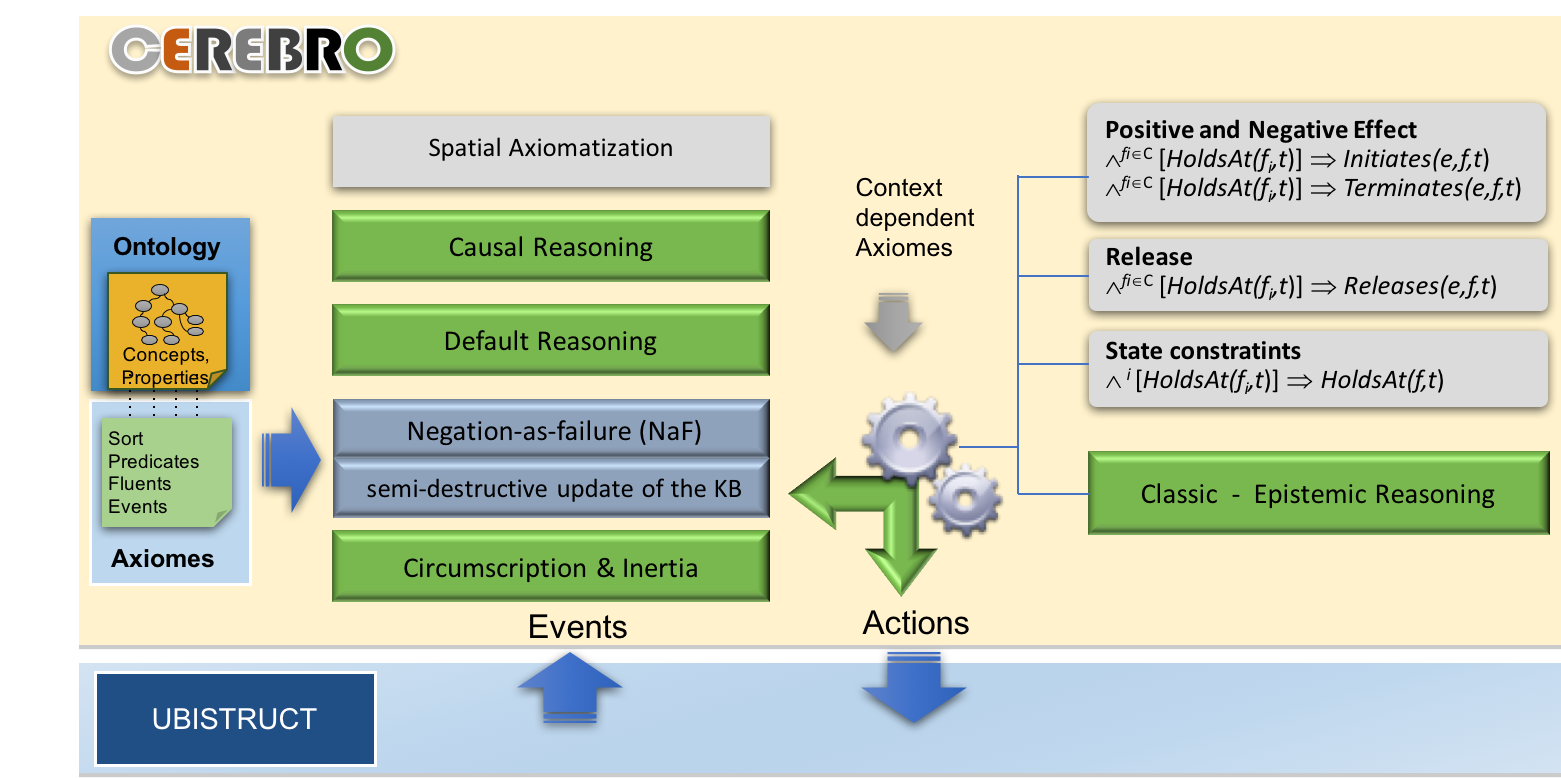
Cerebro is a hybrid platform for high-level causal and temporal reasoning on events and their effects in dynamic and uncertain domains. Emphasis has been given in the seamless integration of a causal and epistemic rule-based event calculus system with multi-modal probabilistic inferencing, aiming at completing the loop of knowledge representation, reasoning and decision making in real-world settings. Cerebro reasoning mechanism relies on the Discrete Event Calculus Knowledge Theory (DECKT) and aims to transfer the benefits of causal and epistemic rule based event calculus, such as the solution to the frame problem for expressive classes of problems, into an efficient forward-chaining system that goes beyond ordinary rule-based systems deployed in dynamic domains, where the actions that lead to the assertion and retraction of facts have no real semantics and high-level structures.
The Cerebro platform's architecture is modular to enable the integration of a multitude of machine learning and reasoning approaches. It includes today a design tool for the specification of event calculus rules and a reasoning engine that performs inferences online.
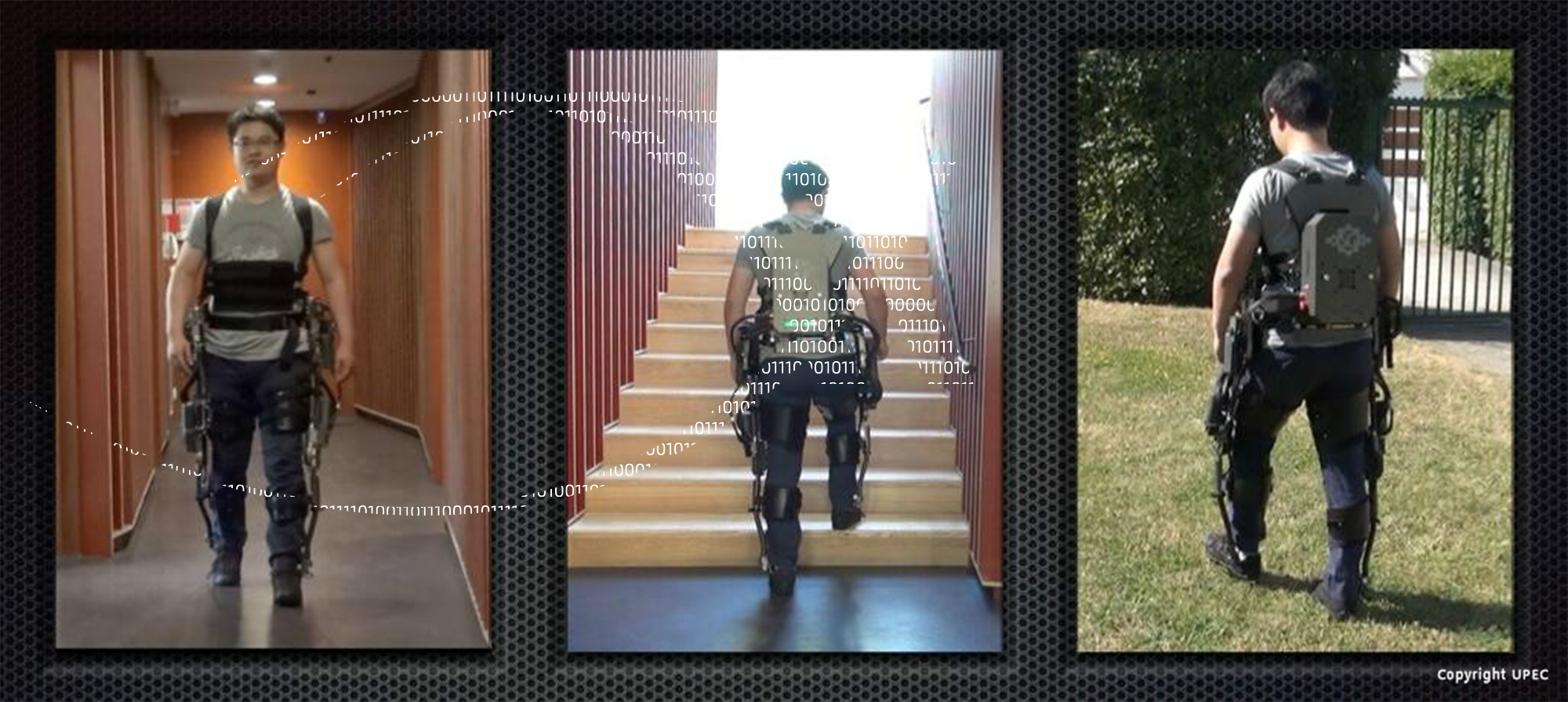
Cerebro is integrated within the ubistruct living lab to control a variety of devices and robots, in order to promote the perception capacity of a ubiquitous assistive system in understanding occurring situations and to react effectively. To this end, Cerebro includes logical programs and Bayesian networks, which can recognize the events that compose activities of daily living in an indoor environment, monitor their proper execution, and perform assistive actions, in the form of recommendations, alerts or device handling, in order to facilitate user's domestic tasks.
References:
T. Patkos, D. Plexousakis, A. Chibani, and Y. Amirat, "An Event Calculus production rule system in dynamic and uncertain domains," Journal of Theory and Practice of Logic Programming, Cambridge University Press, vol. 16, no. 3, pp. 325-352, 2016. .
A. Chibani, A. Bikakis, T. Patkos, Y. Amirat, S. Bouznad, N. Ayari, and L. Sabri, "Using Cognitive Ubiquitous Robots for Assisting Dependent People in Smart Spaces," in Intelligent Assistive Robots- Recent advances in assistive robotics for everyday activities, S. Mohammed and J. C. Moreno and K. Kong and Y. Amirat Eds, Springer Tracts on Advanced Robotics (STAR) series, 2015, pp. 297-316. .
T. Patkos, A. Chibani, D. Plexousakis, and Y. Amirat, "A Production Rule-based Framework for Causal and Epistemic Reasoning," in Proc. Of the RuleML Symposium held in conjunction with ECAI 2012, the 20th biennial European Conference on Artificial Intelligence, Montpellier, France, 2012, pp. 120-135. .
B. Hu, T. Patkos, A. Chibani, and Y. Amirat, "Rule-Based Context Assessment in Smart Cities," in Proc. Of the 6th International Conference on Web Reasoning and Rule Systems, RR 2012, Vienna, Austria, 2012, pp. 221-224. .
B. Hu, A. Chibani, and Y. Amirat, "Semantic context relevance assessment in urban ubiquitous environments," in Proc. Of the 14th International conference on Ubiquitous Computing UbiComp'12, Pittsburgh, United States, 2012, pp. 639-640. .