Neuro-Symbolic AI for Intelligent Robots: Integrating LLMs, Knowledge Graphs, & Automated Reasoning
2026 IEEE/RSJ International Conference on Intelligent Robots and Systems (IROS 2026)
Abstract & Scope
This workshop continues a series previously organized at IROS 2020, IROS 2022, and ICRA 2023, dedicated to the integration of machine learning and automated reasoning for intelligent robotic systems.
The new edition focuses on recent progress in Neuro-Symbolic AI, exploring how the combination of foundation models, formal logical reasoning, and commonsense knowledge such as knowledge graphs can address key limitations of current AI approaches used for intelligent robots and systems.
Although Large Language Models (LLMs) have achieved remarkable results in language understanding, multimodal perception, and planning, supported by techniques such as chain-of-thought prompting and retrieval-augmented generation, they still lack persistent structured memory and formal guarantees of logical consistency. These limitations make them prone to hallucinations and unreliable long-horizon reasoning in complex and safety-critical robotic environments.
At its core, the workshop explores the transformative synergy between large language models, formal logic, and symbolic reasoning, a convergence that promises to transcend the limitations of purely data-driven paradigms. Neural models contribute robust perceptual grounding and generative fluency, while symbolic reasoning, anchored in structured commonsense knowledge such as knowledge graphs, enforces explainability, logical coherence, and safety-critical guarantees, yielding hybrid architectures that are both capable and trustworthy.
Despite the growing interest in this direction, the integration of neural models, large language models, and symbolic knowledge bases such as knowledge graphs within unified neuro-symbolic frameworks for robotics is still at an early stage of development.
Important Dates
Workshop Schedule includes
- Six invited expert talks
- Presentations by young researchers and PhD students
- A poster session
- Interactive discussions among speakers, organizers, and attendees
Workshop Organizers
Leading minds bringing together Neuro-Symbolic AI and Robotics research
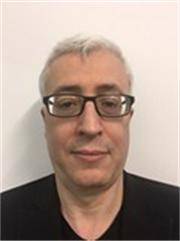
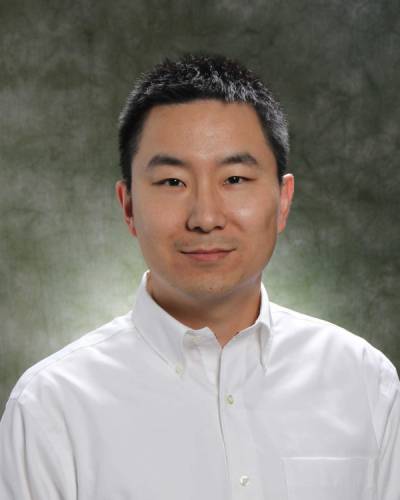
Tetsuya Ogata
Waseda University, Japan
ogata@waseda.jpSupported By



Invited Speakers
Senior researchers presenting cutting-edge advances in Neuro-Symbolic AI
Chen Wang
Assistant Professor University of Buffalo, USATALK TITLE
Neuro-Symbolic AI for Unified Robot Autonomy
Jiayuan Mao
Research Scientist at Amazon Frontier AI & Robotics Assistant Professor University of Pennsylvania, USATALK TITLE
Learning, Reasoning, and Planning with Neuro-Symbolic Concepts
Emre Ugur
Associate Professor Boğaziçi University, TurkeyTALK TITLE
Symbol and Rule Emergence for High-Level Planning in Neuro-Symbolic Robotics
Sheila McIlraith
Professor University of Toronto, CanadaTALK TITLE
The signal-symbol nexus in robotics
Tetsuya Ogata
Professor Waseda University, JapanTALK TITLE
Title TBA
Shiqi Zhang
Associate Professor Binghamton University, USATALK TITLE
Planning with Foundation Models and Commonsense Knowledge: From Service to Assistive Robotics
Workshop Program
Full timetable for October 1st, 2026
Physical Location
Room Name: TBA
Workshop ID: TBAWelcome and Introduction
Organizers
Neuro-Symbolic AI for Unified Robot Autonomy
Chen Wang
Symbol and Rule Emergence for High-Level Planning in Neuro-Symbolic Robotics
Emre Ugur
Learning, Reasoning, and Planning with Neuro-Symbolic Concepts
Jiayuan Mao
Young Researchers and PhD Student Talks
Selected Submissions
Coffee Break — Poster Session
Networking and Interactive Poster Presentations
The Signal-Symbol Nexus in Robotics
Sheila McIlraith
Title TBA
Tetsuya Ogata
Planning with Foundation Models and Commonsense Knowledge: From Service to Assistive Robotics
Shiqi Zhang
Panel Discussion and Open Discussion
With Speakers and Participants
Submissions
Contribute your research to the IROS 2026 Neuro-Symbolic AI Workshop
Submission Guidelines
We actively encourage young researchers, Ph.D. and Master’s students to submit poster papers presenting preliminary results, ongoing work, and demos. Please consider the following points for your submission:
- Papers should be 4–5 pages in length, following the IEEE IROS 2026 conference format, and must be submitted through the EasyChair conference management system.
- Accepted papers will be published on the workshop website.
- The presentation format (video or paper poster) will be specified to authors at a later stage.
- All submissions will undergo peer review, and acceptance will be based on the quality of the contribution, originality, and relevance to the workshop’s topics of interest.
Topics of Interest
- Neuro-symbolic AI for robotics: integration of learning, reasoning, and planning
- Large Language Models (LLMs) for robot reasoning, planning, and control
- Knowledge graphs and structured representations for robotic systems
- Language grounding and language-to-action / language-to-symbolic translation
- Task and motion planning with foundation models
- Hybrid neural-symbolic architectures for embodied AI
- Commonsense reasoning and world modeling for robots
- Explainability, reliability, and safety in LLM-based robotic systems
- Hallucination mitigation and logical constraint enforcement
- Real-time reasoning and scalability in autonomous robotic systems
- Cognitive and bio-inspired approaches to robot intelligence
- Evaluation benchmarks and methodologies for neuro-symbolic robotics
- Responsible and trustworthy AI for robotics applications
Key Submission Dates
Location
Venue and details for the workshop in Pittsburgh, USA
Pittsburgh, USA
IROS 2026 will be hosted in the historical and tech-forward city of Pittsburgh, Pennsylvania, USA. Famous for its industrial heritage and transition into a global innovation hub for robotics and AI.
IROS 2026 Workshop Venue
1000 Fort Duquesne Boulevard, Pittsburgh, PA 15222, United StatesRoom Name: TBA ; Workshop ID: TBA
Will be announced once rooms are finalized by IROS 2026Workshop Organizers
Contact and affiliation details for the program organizers